

Thyroid Care
Home » Thyroid Care
Physician-led thyroid care in Surfside Beach that goes beyond a simple TSH test — full thyroid testing, a thorough history and exam, and a treatment plan built around your unique biochemistry.
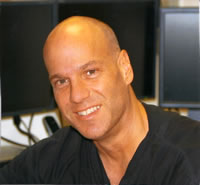
MEET YOUR PHYSICIAN
Allen Smolenski, M.D.
Dr. Smolenski founded Coastal Medical Clinic in 2009 after his own health transformation — losing nearly 60 pounds, then placing third in a national natural bodybuilding contest at age 44. His patients travel from as far as Virginia for help with hormone balance, nutritional deficiencies and age-related illness.
Emergency Medicine physician · Fellowship training in Anti-Aging & Regenerative Medicine (A4M) · Founder, Coastal Medical Clinic
Meet Dr. Smolenski →Is your thyroid sabotaging your energy and weight?
Your thyroid is the master gland of metabolism and energy — could yours be underactive? We know that 59 million Americans have a thyroid condition, and most are hypothyroid, meaning they have a poorly functioning or slow thyroid.
Most people with hypothyroidism aren't diagnosed until they present with advanced disease. Meanwhile, they suffer various symptoms without realizing they have a thyroid imbalance — or worse, they go to doctors who explain away their symptoms as depression or emotional. In 2003, the American Association of Endocrinologists announced that doctors are failing to properly diagnose hypothyroidism because the standard laboratory ranges for TSH are inaccurate.
Dr. Smolenski doesn't just rely on a simple TSH test to diagnose thyroid disease. In order to fully evaluate you for hypothyroidism, we must also look at the free levels of thyroxine (T4) and triiodothyronine (T3), along with reverse T3 and thyroid antibodies. These highly sensitive blood tests, along with a thorough history, review of systems, family and social history and physical exam, are needed to accurately diagnose and treat thyroid imbalances.
Signs of hypothyroidism
With hypothyroidism, “everything is thicker, slower and drier”: weight gain; hair loss; brittle hair and nails; thick, dry, coarse skin; chronic constipation; feeling cold — especially in the hands and feet — even on warm days; low basal temperature; fatigue, exhaustion and low energy, even after 12 hours of sleep; brain fog and indecisiveness; poor memory and concentration; sluggishness; muscle weakness; pain and stiffness in muscles or joints; depression, mood swings and severe PMS; high cholesterol; menstrual cycle irregularities, prolonged and heavy; infertility; numbness and tingling, especially in the hands and face; and fluid retention, with swelling of the face and feet.
Using a functional medicine approach, Dr. Smolenski will also assess you for conditions that are associated with hypothyroidism, including fibromyalgia, chronic fatigue syndrome, adrenal fatigue, nutritional and iodine deficiencies, chronic infectious diseases, intestinal dysbiosis, food allergies and environmental toxins.
Hyperthyroidism: when the thyroid runs too fast
Hyperthyroidism (overactive thyroid) is a condition in which your thyroid gland produces too much thyroid hormone. Hyperthyroidism will accelerate your body's metabolism, causing sudden weight loss, a rapid or irregular heart rate, sweats, and nervousness. Hyperthyroidism often mimics other health conditions, which may make it difficult for your doctor to correctly diagnose. It can also cause a variety of symptoms, including: sudden weight loss, rapid or irregular heartbeat (palpitations), increased appetite, nervousness, anxiety and irritability, tremors, increased sensitivity to heat, frequent bowel movements, fatigue and muscle weakness, difficulty sleeping, sweating, and changes in menstrual patterns.
Older adults are more likely to have either no signs or symptoms, or subtle ones, such as weight loss, depression or a tendency to become tired during ordinary activities. Medications called beta blockers, which are commonly used for high blood pressure, can mask many of the signs of hyperthyroidism.
What your care includes
Dr. Smolenski uses an integrative, research-based healthcare approach to treat thyroid illness and promote wellness by focusing on the bio-chemically unique aspects of each patient. The body's hormonal and physiological systems have a complex, web-like interconnection — much like a symphony: when the body's “instruments” are finely tuned and playing together in harmony, there will be beautiful music.
Testing beyond TSH
Free T4 and free T3, reverse T3 and thyroid antibodies — with state-of-the-art diagnostic testing utilizing urine and blood specimens to assess your thyroid balance.
A plan tailored to your biochemistry
An individual treatment plan focused on your unique physiological processes, the environmental inputs, and the genetic predispositions that influence health and disease — to restore physiological, psychological, and structural balance.
Treating the cause
Interventions that treat the cause of thyroid disease, not just mask the symptoms.
Ongoing evaluations
Follow-up focuses on balancing your hormones in accordance with your symptoms. After starting therapy, Dr. Smolenski meets with you to discuss your progress and symptoms and to monitor your hormone levels.
RELATED ARTICLES
Keep reading
Autoimmune Hypothyroidism: Hashimoto's Thyroiditis
When the immune system turns on the thyroid: the autoimmune form of hypothyroidism, explained.
Read article →What Does a High Reverse T3 Mean?
What a high reverse T3 result means — and why it belongs in a complete thyroid evaluation.
Read article →Are You Getting Enough Vitamin D?
Vitamin D's place in your overall hormone picture, and how to tell if you're getting enough.
Read article →Ready to discuss what's next?
Request a consultation with Dr. Smolenski to discuss your concerns, your evaluation, and the appropriate next steps for your care.